
Every month has a flower. It is one of those old traditions, stretching back to ancient Rome, where people believed the bloom of your birth month carried a kind of protective meaning. What makes birth flower tattoos so relevant today is how naturally these flowers work as designs. They are personal without being literal, symbolic without needing explanation, and they look incredible across nearly every tattoo style.
Birth flower tattoos have become one of the most searched tattoo ideas of the year, and the trend keeps growing. Whether you want a single delicate stem on your wrist or a full family bouquet combining the birth flowers of everyone you love, this guide covers all twelve months, what they mean, and how to turn them into great ink.
The Twelve Birth Flowers and Their Meanings
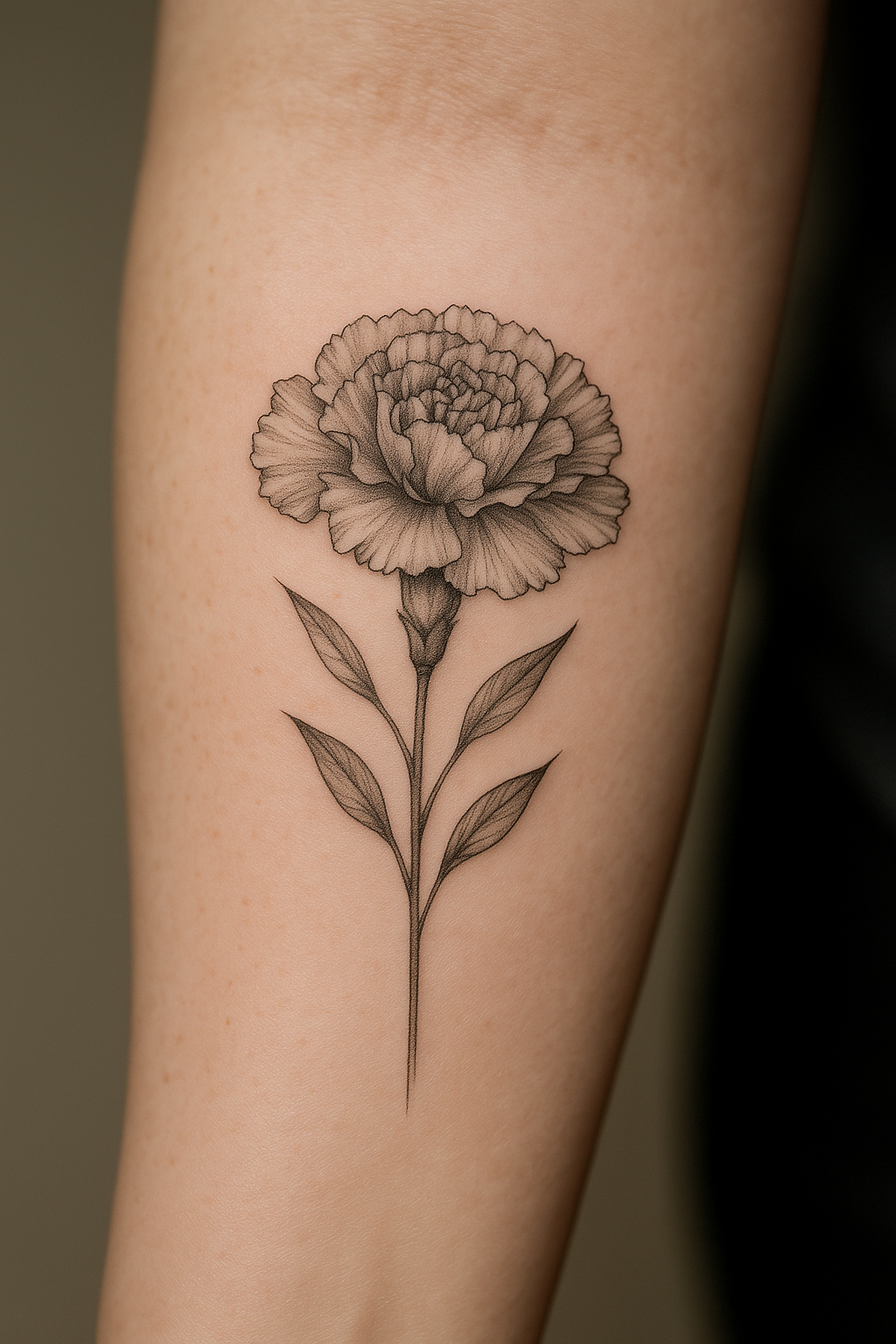
January Birth Flower: Carnation and Snowdrop
The carnation is a flower of distinction. In the language of flowers, it speaks to love, fascination, and deep admiration, with its meaning shifting by color. Pink carnations honor a mother’s gratitude, red ones signal deep romantic love, and white represents purity. The snowdrop, January’s quieter companion, symbolizes hope and rebirth. On skin, the carnation’s layered, ruffled petals translate beautifully into detailed blackwork or soft neo-traditional shading, while the snowdrop’s delicate bell shape makes it a perfect candidate for fine-line minimalism.
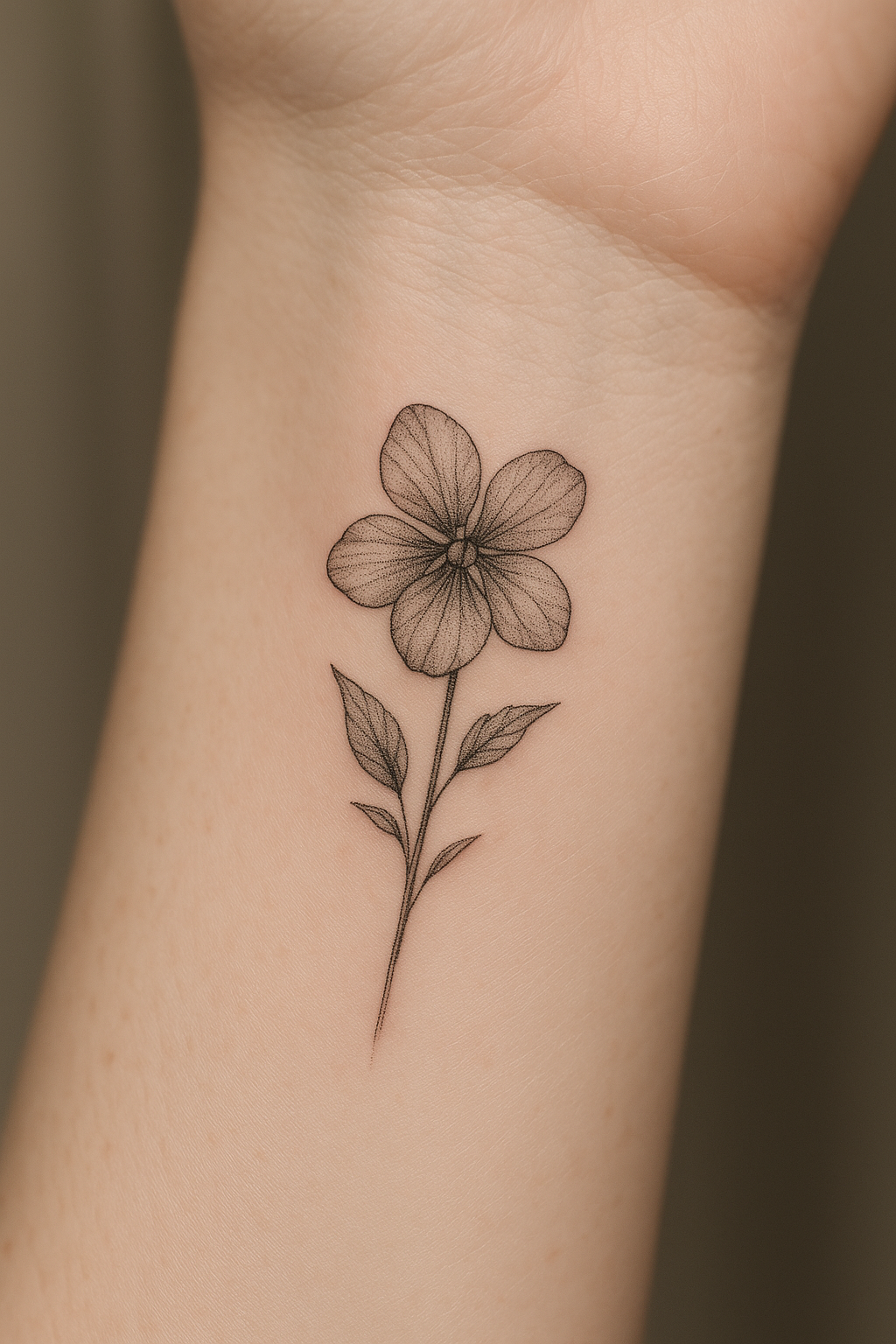
February Birth Flower: Violet and Primrose
Violets carry centuries of literary weight. They were beloved by Sappho, worn by Napoleon’s supporters as a secret symbol of loyalty, and their very name gave us the color, not the other way around. As a tattoo, the violet represents faithfulness, humility, and quiet devotion. Primroses speak to young love and gentle affection. Both flowers lend themselves to intimate, smaller-scale tattoos: behind the ear, along the wrist, or tucked into the inner forearm.
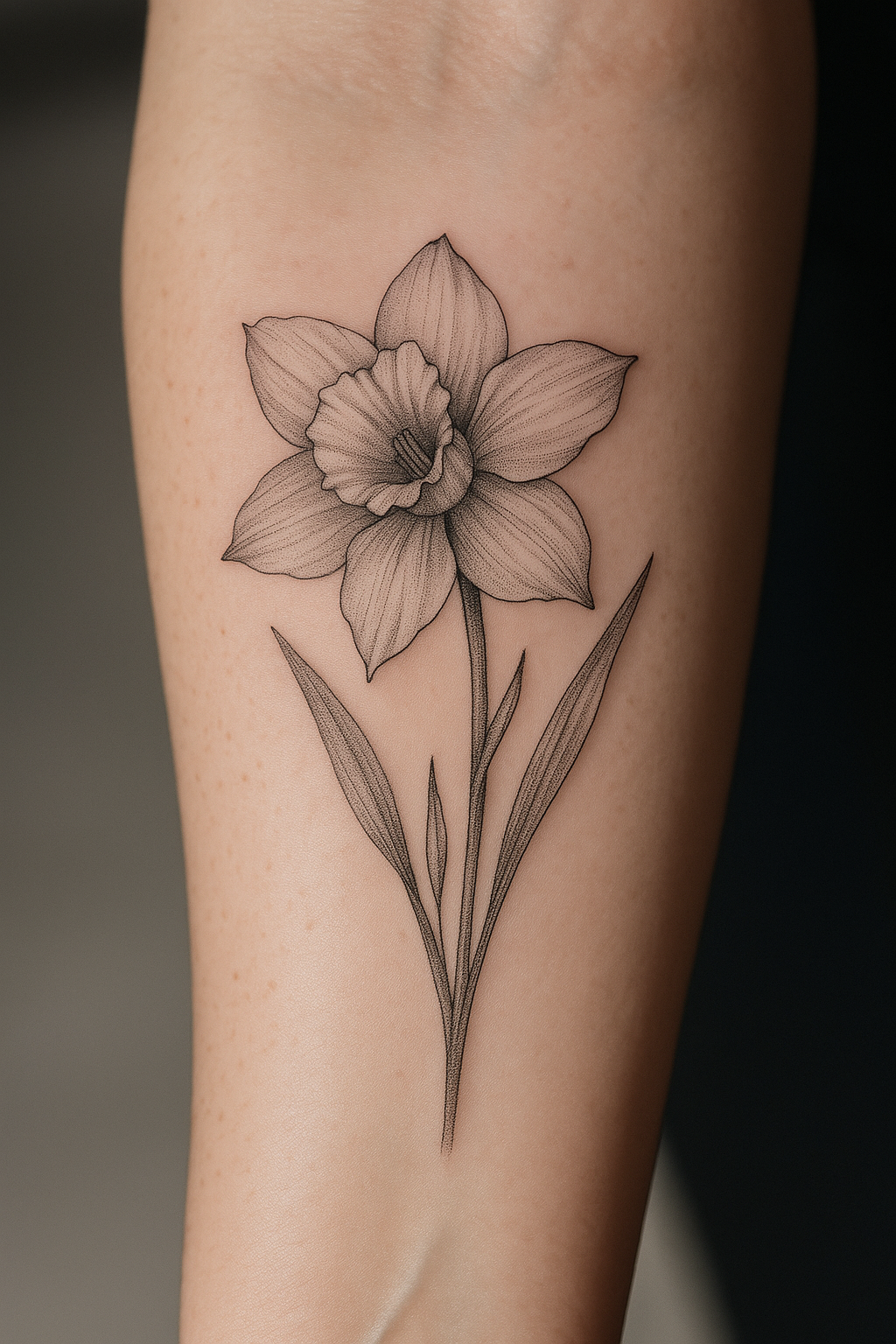
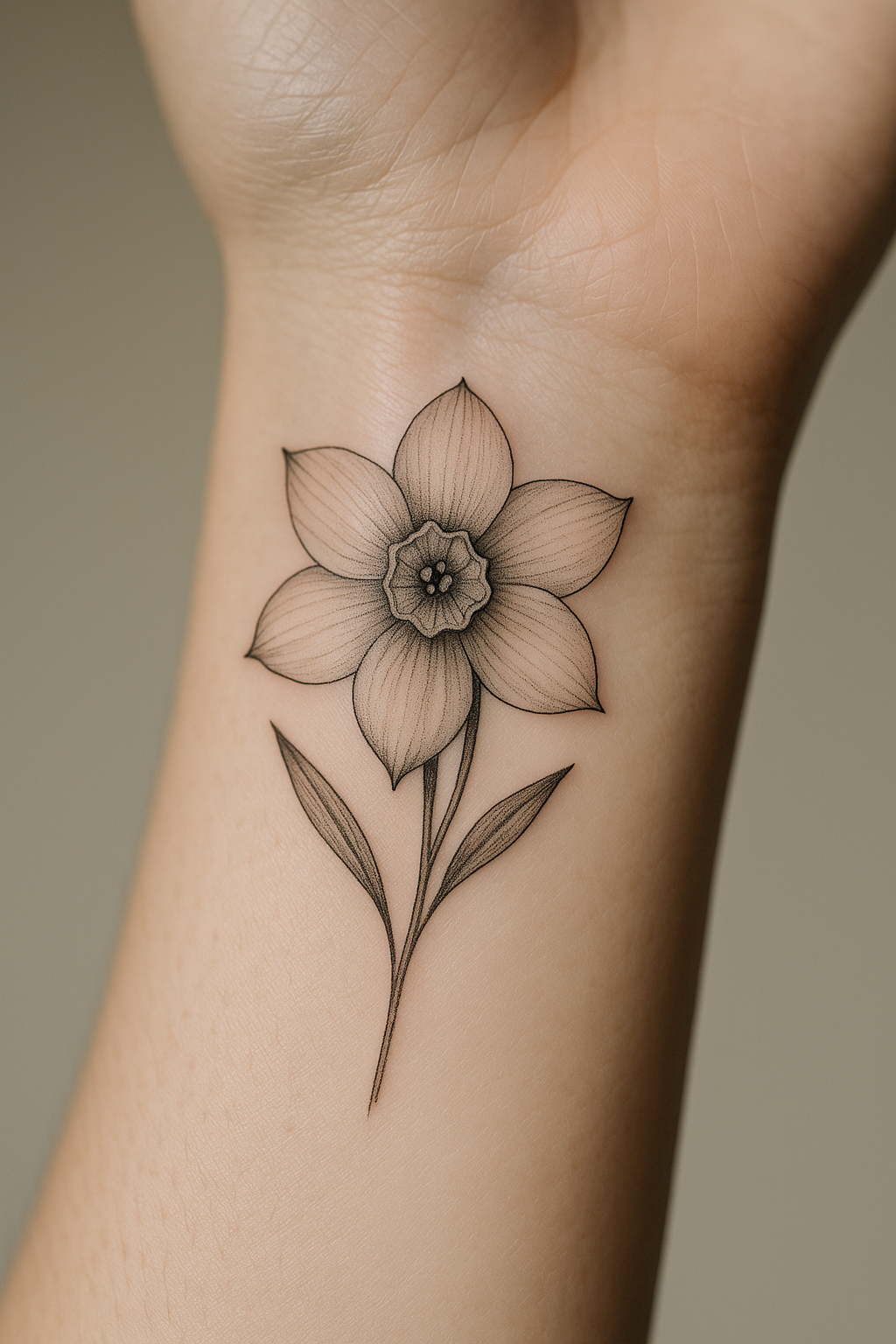
March Birth Flower: Daffodil
The daffodil is spring’s herald, and everything about it radiates forward motion: new beginnings, renewal, and optimism. Its trumpet-shaped bloom is instantly recognizable and works powerfully across tattoo styles. A single daffodil in fine line work carries a quiet elegance, while a cluster rendered in watercolor can capture the golden warmth of early spring light. For those born in March, this birth flower tattoo is a permanent reminder that brighter days always return.
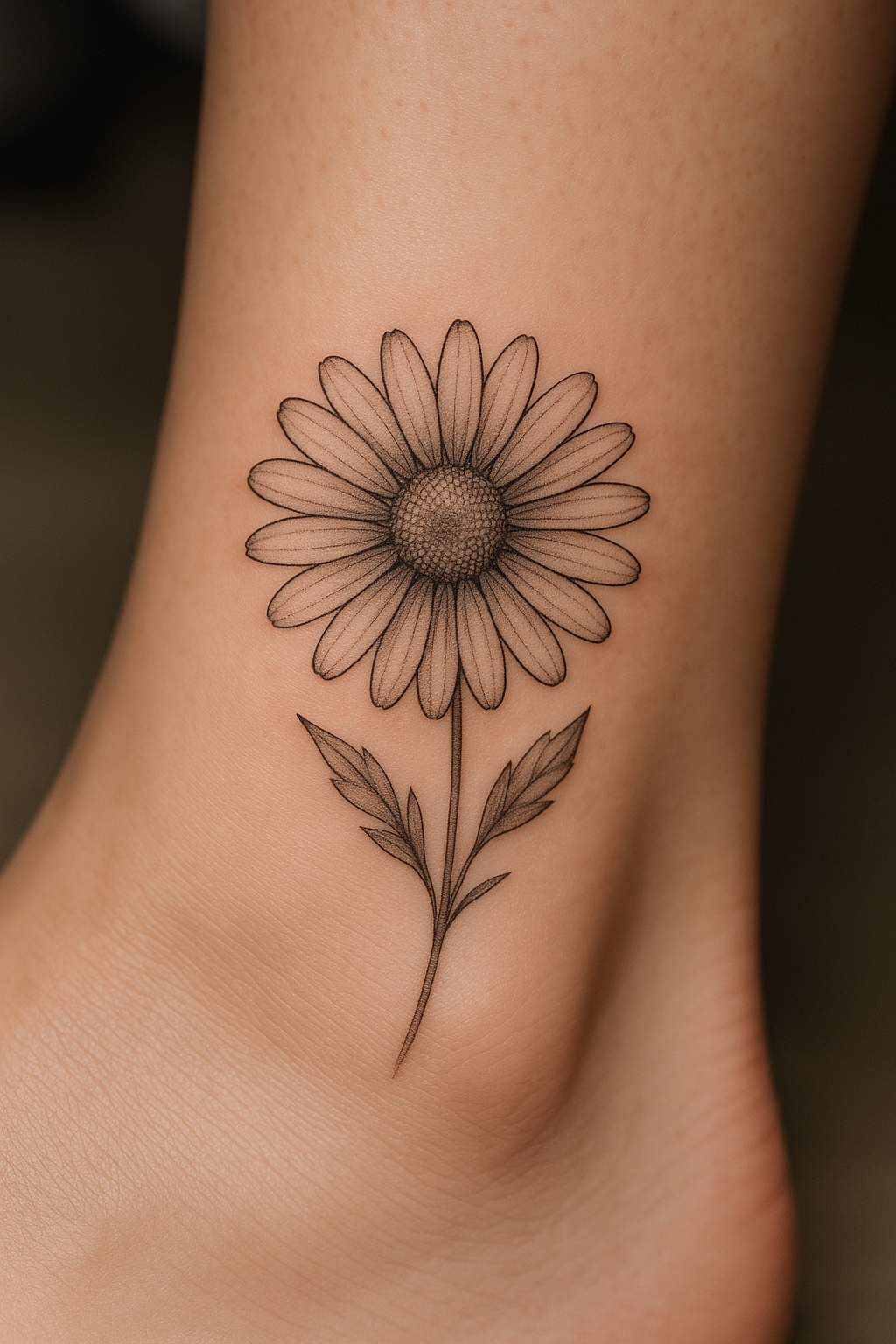
April Birth Flower: Daisy and Sweet Pea
The daisy is simple, symmetrical, and endlessly cheerful. It represents innocence, purity, and loyal love, and it is one of the most versatile birth flowers for tattoo design. It works equally well as a tiny finger tattoo or as part of a larger botanical composition. The sweet pea carries a bittersweet note: gratitude and delicate pleasure, but also departure. Together they offer a design palette that ranges from playful to poignant.
May Birth Flower: Lily of the Valley and Hawthorn
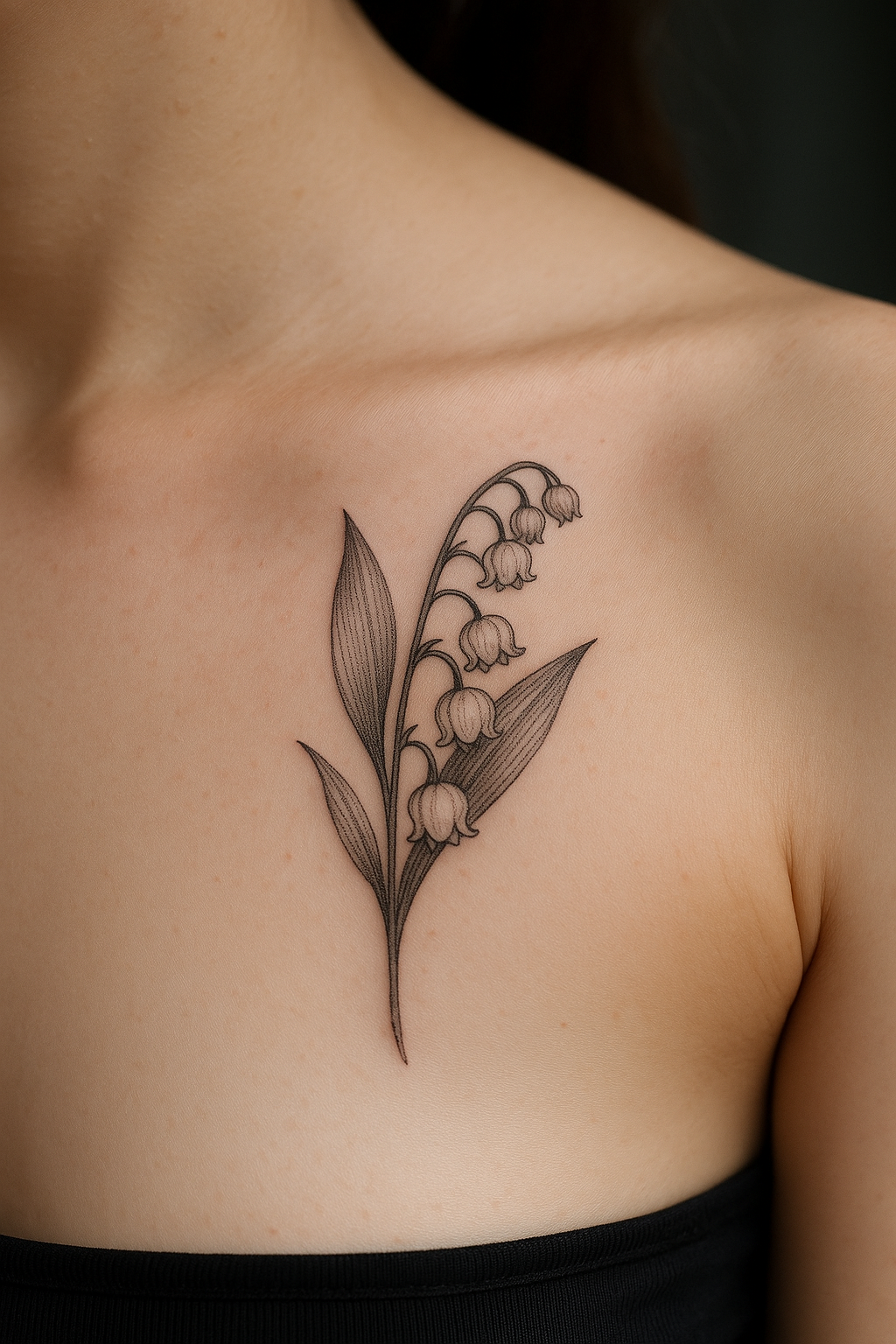
Few flowers carry as much meaning as the lily of the valley. Associated with the return of happiness and purity of heart, it has been a traditional bridal flower for centuries. Its cascading bell-shaped blooms create a naturally flowing design that follows the body’s contours beautifully, draping along a collarbone, trailing down a forearm, or curving around the ribcage. Hawthorn, May’s second bloom, adds a sturdier note of hope, protection, and inner strength.
June Birth Flower: Rose and Honeysuckle
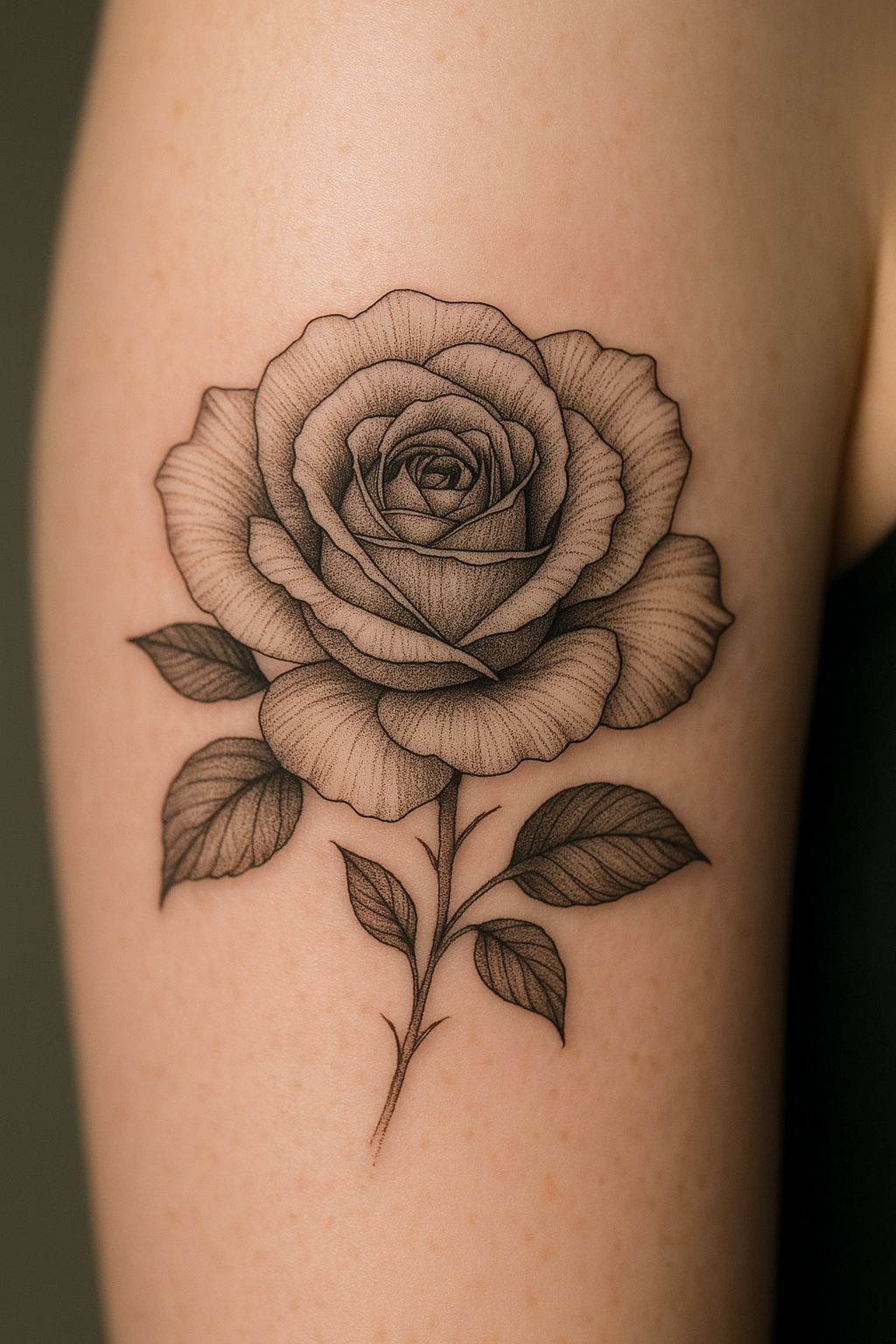
The rose needs little introduction. It is perhaps the most tattooed flower in history, and for June babies, it carries personal significance beyond the aesthetic. Each color tells a different story: red for romantic passion, yellow for friendship, pink for grace and gratitude, white for innocence. The choice of ink matters here, as color longevity varies by formula. What makes a birth flower rose tattoo distinct from a generic rose design is the intentionality behind it. It is not simply decorative but deeply biographical. Honeysuckle, June’s companion, represents the bonds of love and sweetness of connection.
July Birth Flower: Larkspur and Water Lily
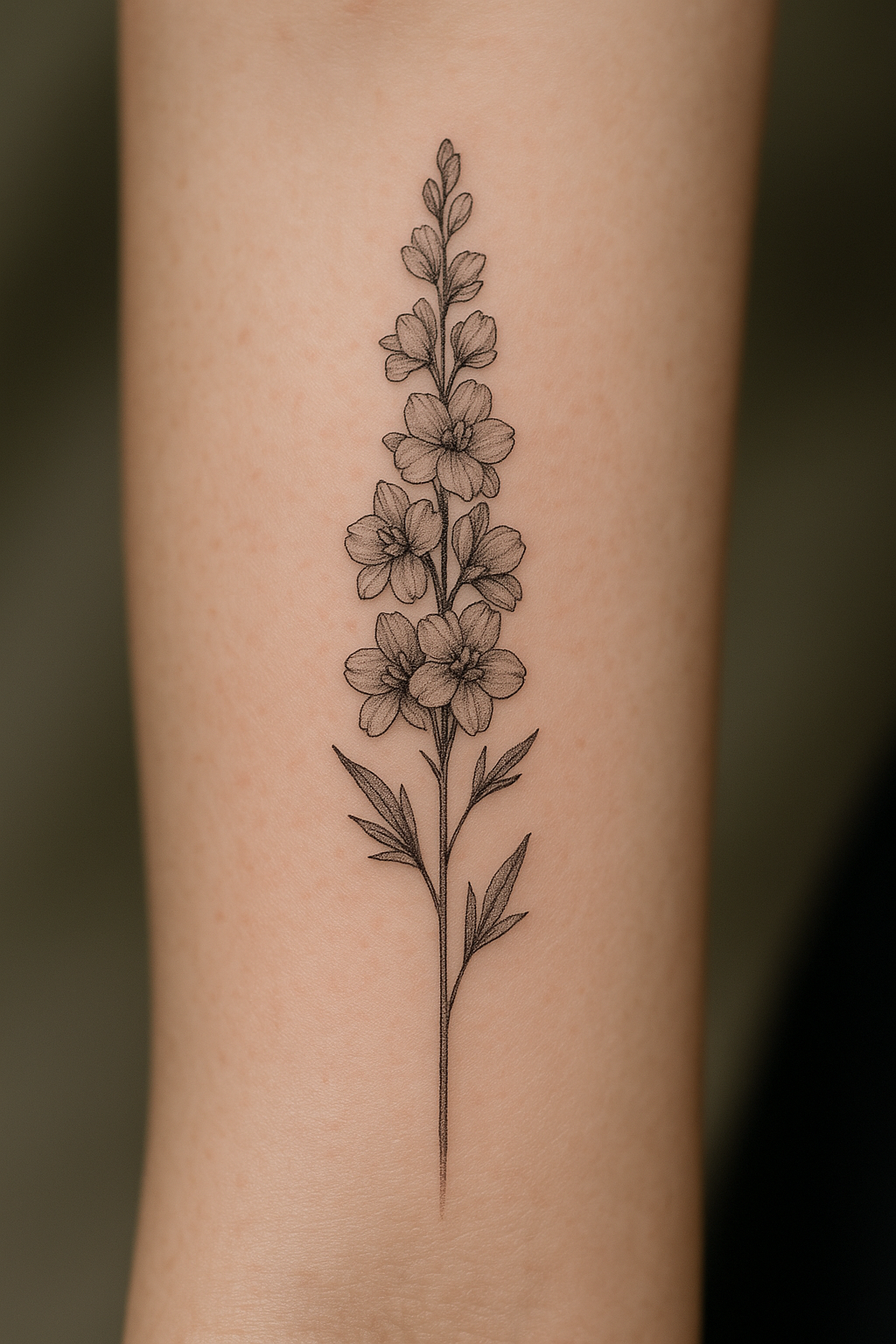
Larkspur is a flower of lightness and grace, its tall spires of color embodying positivity and an open heart. Different colors carry different nuances: pink for fickleness, white for happiness, purple for first love. This gives July babies a rich symbolic vocabulary to draw from. The water lily brings an entirely different energy, one of stillness, purity, and spiritual enlightenment. Both offer striking silhouettes that work particularly well in larger compositions.
August Birth Flower: Gladiolus and Poppy
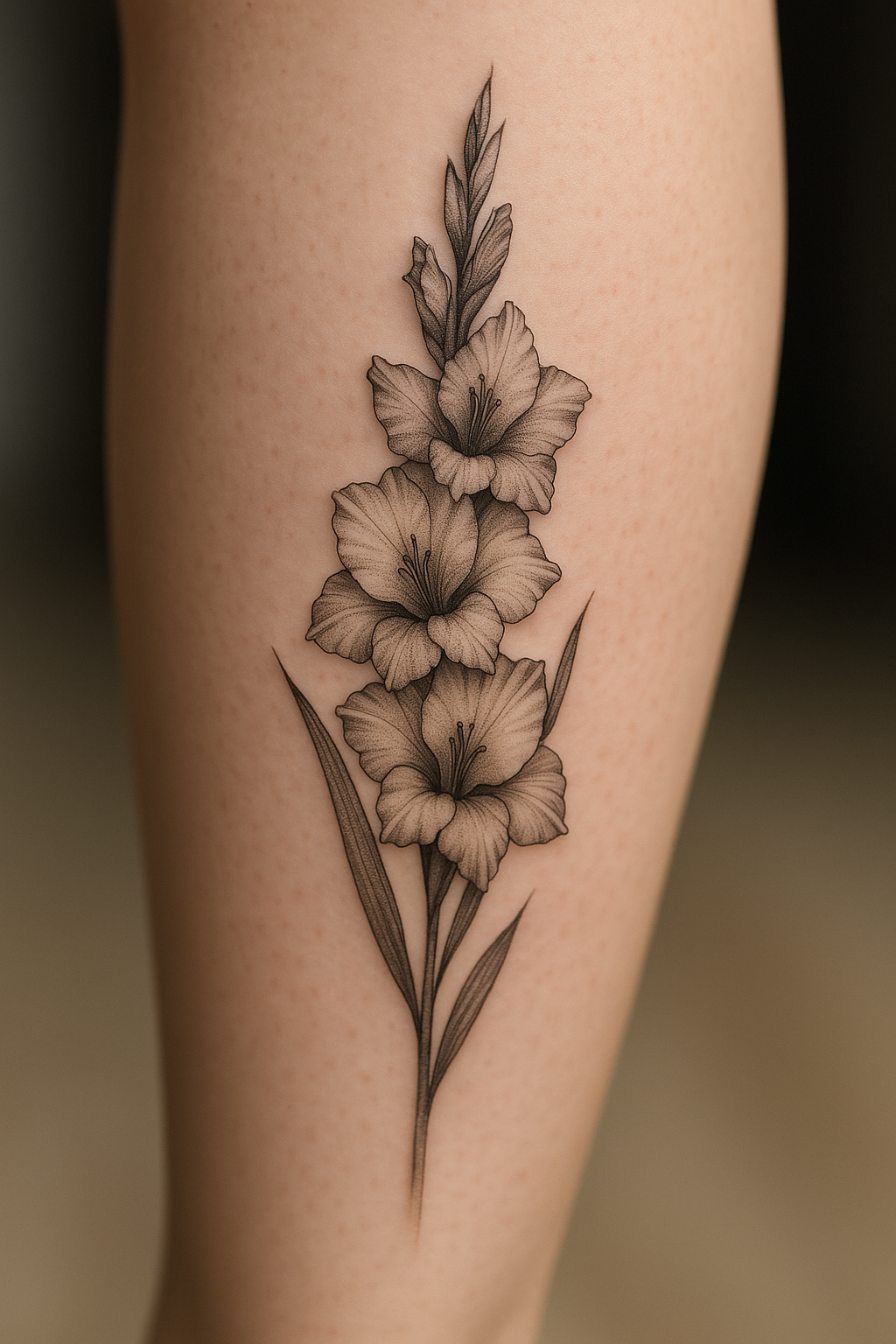
The gladiolus takes its name from the Latin word for sword, and everything about it speaks to strength of character, integrity, and moral courage. Its tall, stacked blooms create a dramatic vertical design that works beautifully along the spine, forearm, or calf. The poppy carries one of the most emotionally resonant meanings in the floral world: remembrance, imagination, and consolation. Its association with Flanders Fields and the remembrance of fallen soldiers gives it a gravity that few other flowers can match.
September Birth Flower: Aster and Morning Glory
The aster, named for the Greek word for star, is a flower of wisdom, patience, and enduring love. Its star-shaped bloom translates naturally into geometric and dotwork styles, where the radiating petals can be rendered with precise, meditative detail. The morning glory, which unfurls each dawn only to close by afternoon, carries a poetic tension between beauty and impermanence. It is a thoughtful choice for those who find meaning in life’s fleeting moments.
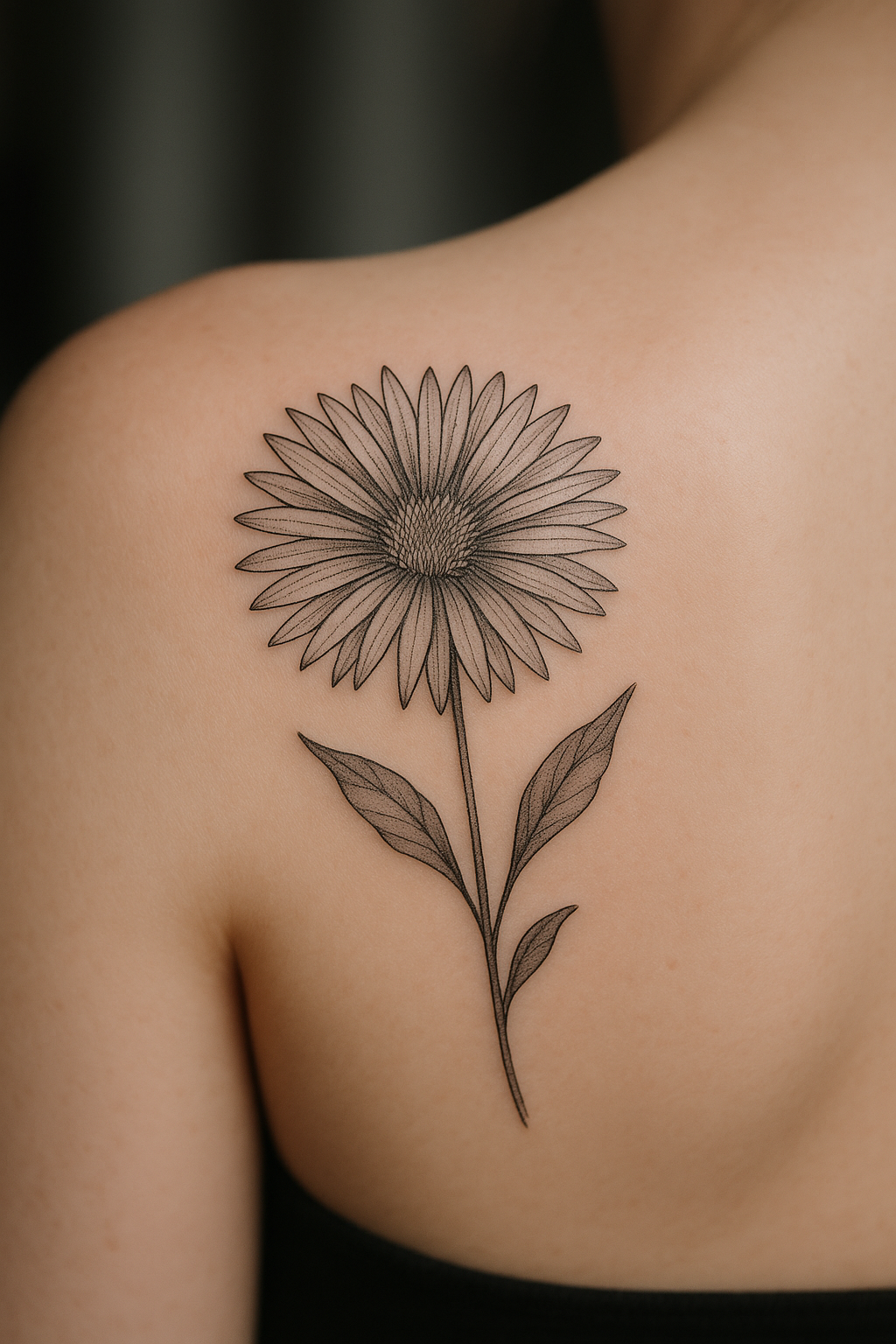
October Birth Flower: Marigold and Cosmos
Marigolds are flowers of fierce warmth: resilience, creativity, and an almost defiant joy. In Mexican culture, they play a sacred role in Dia de los Muertos, guiding spirits home with their vivid orange and gold petals. This cultural depth adds a powerful layer of meaning to an October birth flower tattoo. The cosmos, with its perfectly symmetrical petals, represents harmony, balance, and tranquility, a beautiful counterpoint to the marigold’s fiery energy.
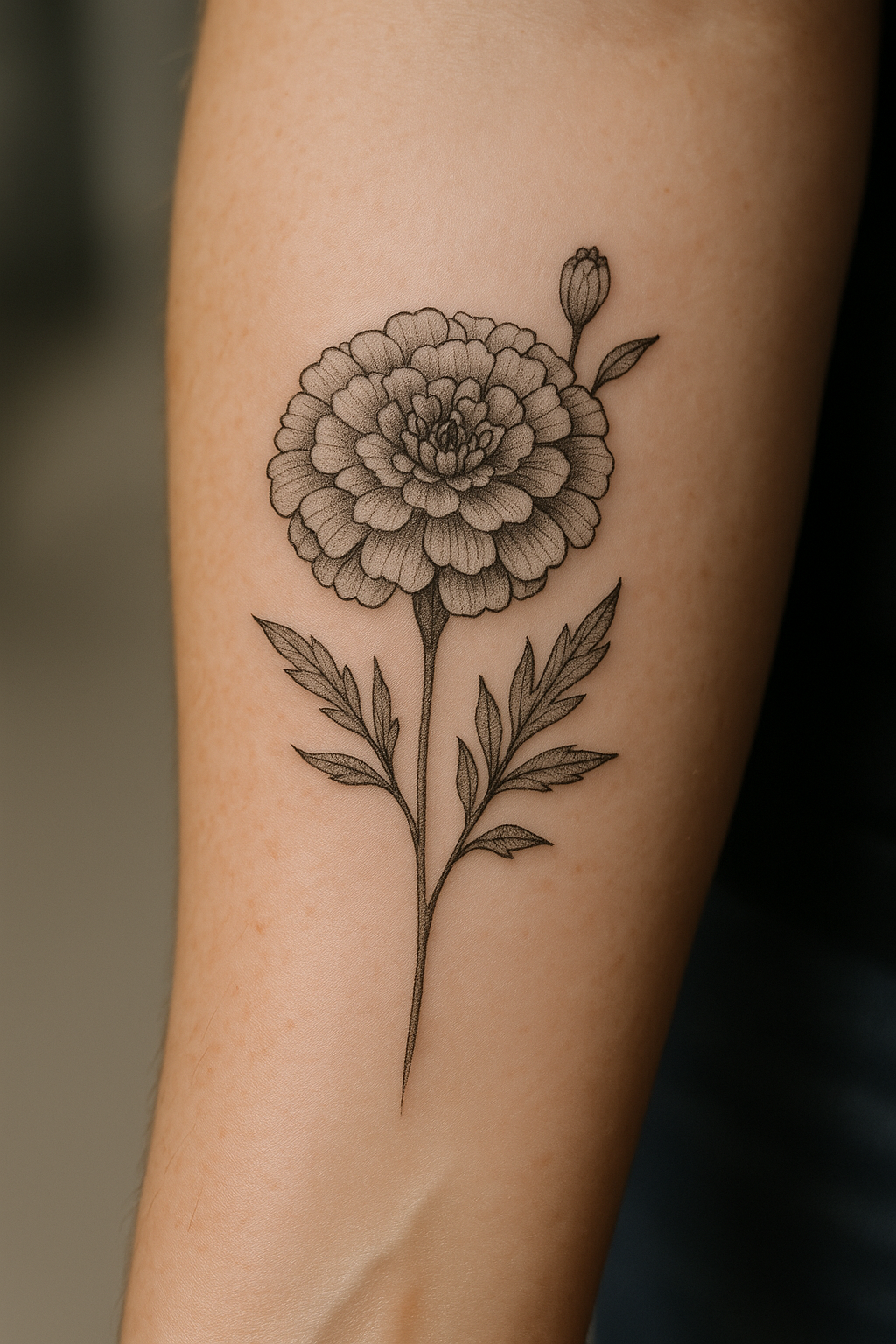
November Birth Flower: Chrysanthemum
The chrysanthemum is a flower that commands respect across cultures. In Japan, it serves as the Imperial Seal. In China, it represents longevity and resilience. As a tattoo, its densely layered petals offer extraordinary textural possibilities, from the precise linework of a Japanese-style chrysanthemum to the loose, painterly strokes of a watercolor interpretation. November babies inherit a flower that symbolizes loyalty, friendship, and the kind of joy that endures through all seasons.
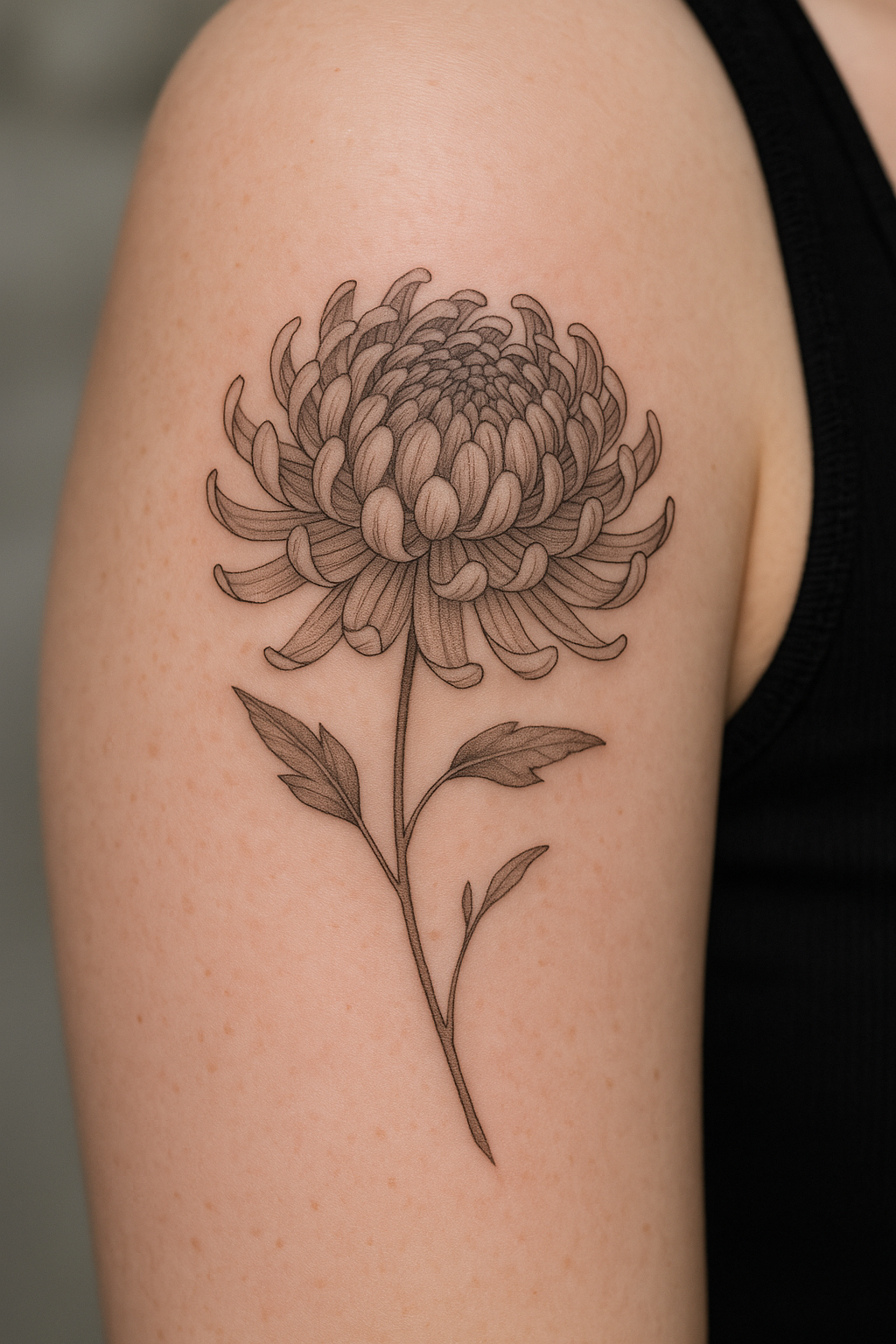
December Birth Flower: Narcissus and Holly
The narcissus, or paperwhite, closes the calendar year with wishes of hope, faithfulness, and new prosperity, a quiet echo of the snowdrop that opens it. Its clean, symmetrical shape lends itself to elegant, understated designs. Holly brings a more robust energy: protection, happiness, and goodwill. The contrast between the narcissus’s delicacy and holly’s sharp-edged leaves creates a compelling design tension for those who want to honor both blooms.
The Family Bouquet: Combining Birth Flowers for Loved Ones
One of the most meaningful developments in birth flower tattooing right now is the family bouquet. Rather than inking a single bloom for yourself, you gather the birth flowers of your loved ones into a single cohesive arrangement. Children, parents, partners, siblings, close friends: each one represented by their month’s flower, woven together into a design that tells your family’s story without a single word. For many people, tattoos like these become deeply tied to how they see and feel about their own bodies.
The beauty of the family bouquet is that it grows with you. A mother might begin with her own birth flower and her first child’s, then add blooms as her family expands. Siblings get matching arrangements that include each other’s flowers. Memorial bouquets incorporate the birth flower of someone who has passed, keeping their presence part of the design.
Design variations are endlessly creative. Small posies tied with ribbon work for the wrist or ankle. Climbing spine arrangements stack flowers vertically for dramatic effect. Half-sleeve compositions can tell an entire family’s story. The key is working with an artist who can compose different flowers into a cohesive botanical arrangement that looks intentional rather than assembled.

Best Tattoo Styles for Birth Flower Designs
Birth flower tattoos thrive across virtually every tattoo style, but some pairings work particularly well.
Fine line work captures the botanical precision of each flower with delicate, single-needle detail. This is the most popular style for birth flower tattoos and works beautifully at smaller scales. Look for artists who specialize in botanical fine-line work, such as Eleanor Rose Boynton, Zihwa, or Asya Teryaeva, whose floral work we featured on this blog.
Watercolor mimics the translucent, flowing quality of watercolor paintings, creating soft color gradients without heavy outlines. This style pairs especially well with flowers that have vibrant natural colors like poppies, roses, and larkspurs. Artists like Pis Saro have made this approach an art form.
Blackwork uses exclusively black ink to create dramatic, high-contrast botanical pieces. Flowers with strong structural shapes like chrysanthemums, roses, and gladioli shine in this style. Vlada Shevchenko and Diana Severinenko are known for their striking floral blackwork.
Botanical illustration takes a scientific, almost textbook approach to rendering flowers with precise detail and accurate proportions. This style demands a larger canvas where the intricacy can be fully appreciated: forearms, upper arms, or thighs.
Neo-traditional combines bold outlines with rich, saturated colors and enhanced detail. Birth flower tattoos in this style have excellent longevity thanks to the strong linework, and the expanded color palette allows for vivid, eye-catching pieces. Alice Kendall’s work is a masterclass in this approach.
Where to Place a Birth Flower Tattoo
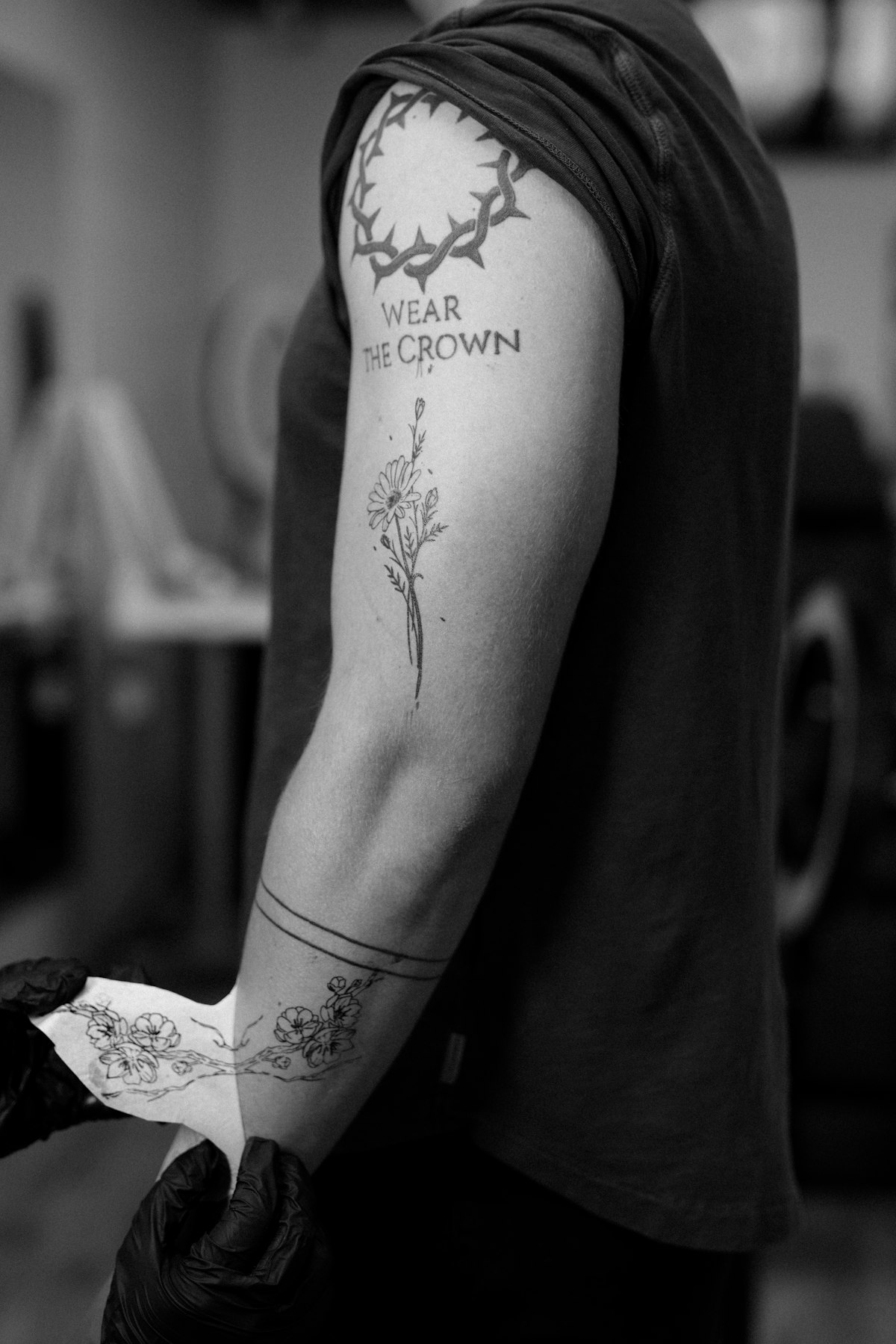
Where you place a birth flower tattoo matters as much as the design itself. The inner forearm remains the most popular choice for floral tattoo placement. Its flat surface accommodates detail, and the visibility makes it easy to share the story behind the piece. Wrist and collarbone placements suit smaller, more delicate single-bloom designs. For family bouquets, the ribcage and spine offer dramatic vertical canvases, though both are among the more painful spots. The upper arm and shoulder blade provide generous space for larger botanical illustrations that can grow into half-sleeves over time.
One practical note worth mentioning: finger tattoos, while trending for ultra-minimalist stems, fade significantly faster than other placements and will likely need frequent touch-ups. If longevity matters to you, consider the wrist or inner arm instead.
Why Birth Flower Tattoos Endure
Trends come and go in tattooing, but birth flower tattoos have staying power because they sit at the intersection of the personal and the universal. Everyone has a birth month. Everyone has people they love. A birth flower tattoo takes something as simple as a calendar date and transforms it into a living symbol of identity, of connection, of the stories we carry with us. And unlike a name or a date inked on skin, a flower ages with grace.
If you are considering a birth flower tattoo, spend time with the symbolism. Learn what your flower has meant across centuries and cultures. Then find an artist whose style speaks to you, and together, create something that blooms for a lifetime.
Thinking about your first birth flower tattoo or planning a family bouquet? We would love to hear about it at [email protected]. Thanks for reading!

Other Articles
Carving Myths into Skin: An Interview with Nazarii Kuryliak

No Comment! Be the first one.